Plan on about 13.5–15.5 ft of depth for a camera or overhead launch monitor, 17–19 ft for most radar units behind the ball, 10–12 ft of width (12 ft if left- and right-handed golfers share it) and roughly 9 ft 2 in of ceiling for a 5′10″ golfer swinging a driver.
Depth: the launch monitor decides
Room depth is measured from the wall behind the screen to the back wall. It has to hold three things: a gap behind the impact screen so it can absorb the ball, the distance from the ball to the screen, and space behind the ball for your backswing. A radar unit behind the ball adds a fourth: the distance the unit sits behind the tee.
| Setup | Screen gap | Ball to screen | Behind the ball | Total depth |
|---|---|---|---|---|
| Camera beside the ball (e.g. SkyTrak, Square, GC3) | 1 ft | 8–10 ft | 4.5 ft (backswing) | 13.5–15.5 ft |
| Overhead unit (e.g. EYE XO2, Falcon, ProTee VX) | 1 ft | 8–10 ft | 4.5 ft (backswing) | 13.5–15.5 ft |
| Radar behind the ball (unit 7 ft back) | 1 ft | 8–10 ft of ball flight | 7 ft + 1 ft behind the unit | 17–19 ft |
The ball-to-screen figure is a safety and comfort number. At 8 ft, a well-struck ball rebounds with enough energy to reach the golfer; most sellers recommend about 10 ft. Radar units behind the ball also need that distance to see the ball fly — some list 8 ft of flight as a minimum.
Width: your swing and your household
A right-handed golfer standing to the left of the ball needs clear space around the swing arc on both sides. About 10 ft of width works for one-handed use with the hitting position offset toward one wall; 12 ft lets you center the hitting area so a left-handed golfer can use the same room.
| Use | Minimum width | Comfortable |
|---|---|---|
| Right- or left-handed only | 10 ft | 12 ft |
| Shared left- and right-handed | 12 ft | 14 ft |
| Add for a side-of-ball launch monitor | +1 ft | +1 ft |
Enclosures also set a width: the frame plus about 6 inches each side to assemble it. A 10 ft 10 in frame needs roughly 11 ft 10 in of wall.
Ceiling: the swing, not the screen
The highest point of a driver swing — usually in the follow-through — sets the ceiling. We estimate it as the golfer's height, plus the part of the club that rises above the head, plus the mat and a margin.
| Golfer | Estimated ceiling (driver) |
|---|---|
| 5′4″ | 8′ 8″ |
| 5′6″ | 8′ 10″ |
| 5′8″ | 9′ |
| 5′10″ | 9′ 2″ |
| 6′0″ | 9′ 4″ |
| 6′2″ | 9′ 6″ |
| 6′4″ | 9′ 8″ |
A five-minute measuring checklist
- Measure depth wall to wall, then subtract anything permanent (stairs, shelving, a water heater).
- Measure width at the hitting position, not just at the screen wall.
- Measure ceiling height at the hitting position and note beams, ducts, lights and garage-door tracks.
- Choose a launch monitor whose depth fits — then an enclosure whose frame fits the width and height.
- Check the projector position with the throw calculator.
Run your numbers through the room size calculator to see every launch monitor in our catalog that fits.
Products mentioned
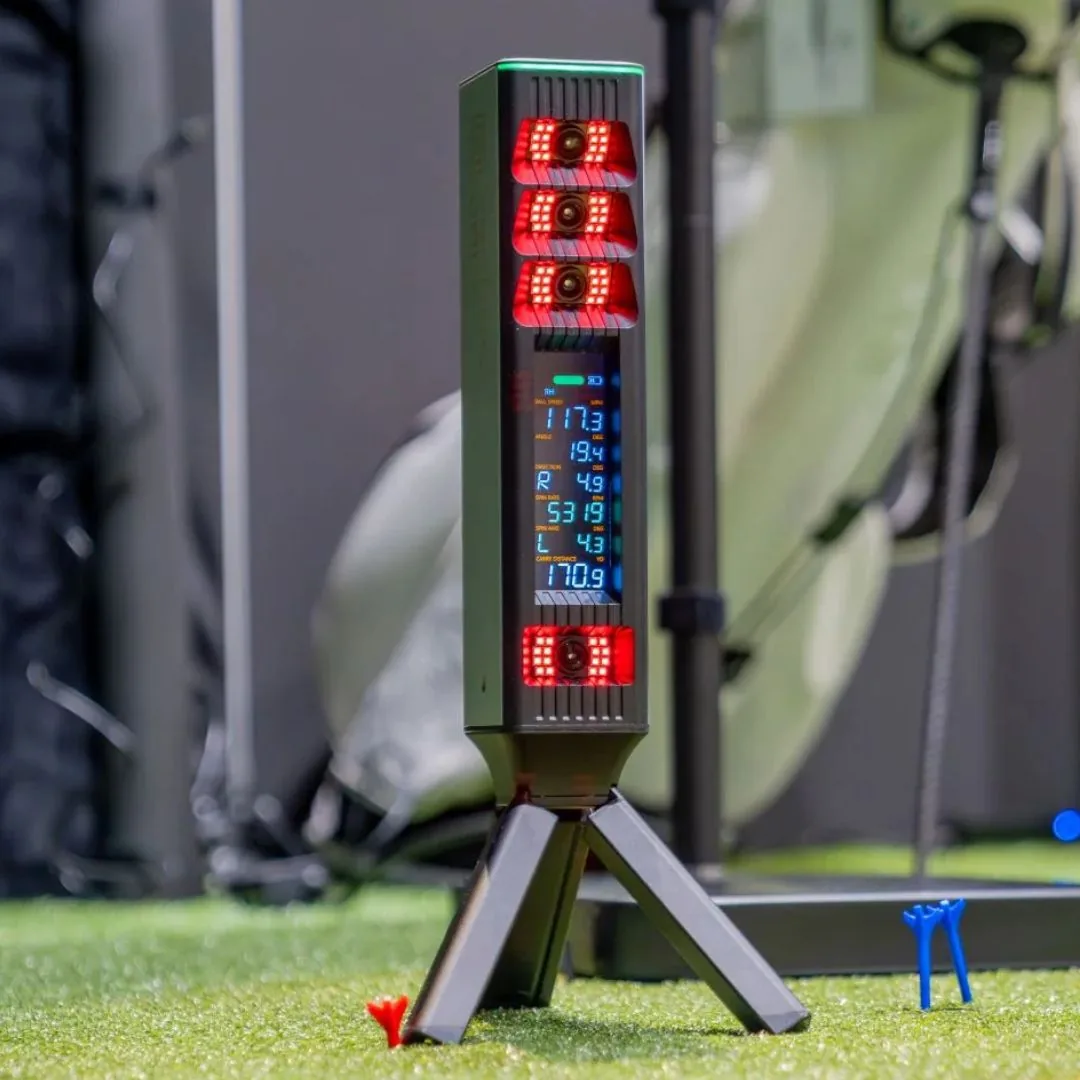
Square Golf Omni
Camera · Beside the ball · 13.5–15.5 ft deep
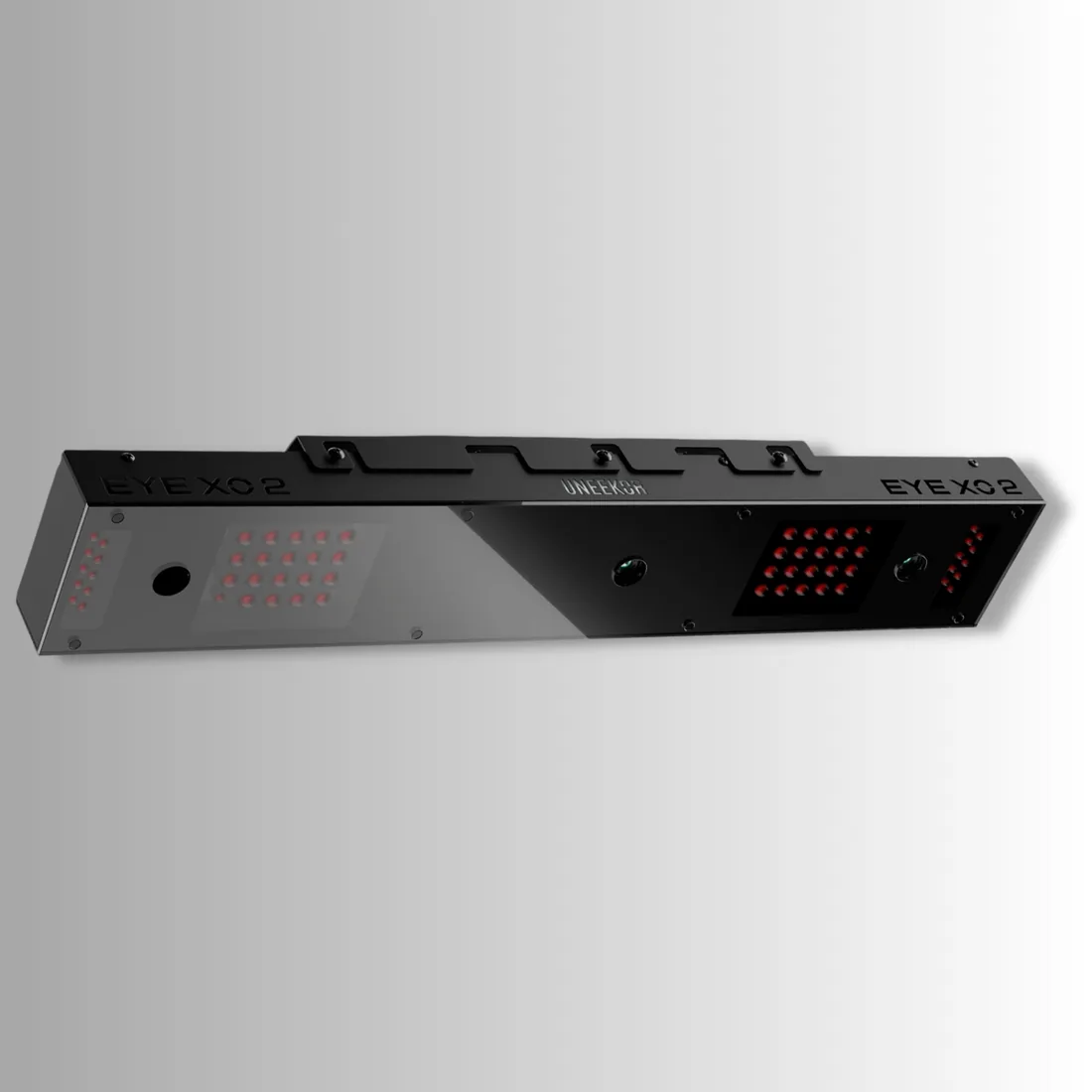
Uneekor EYE XO2
Camera · Ceiling, in front of the ball · 13.5–15.5 ft deep
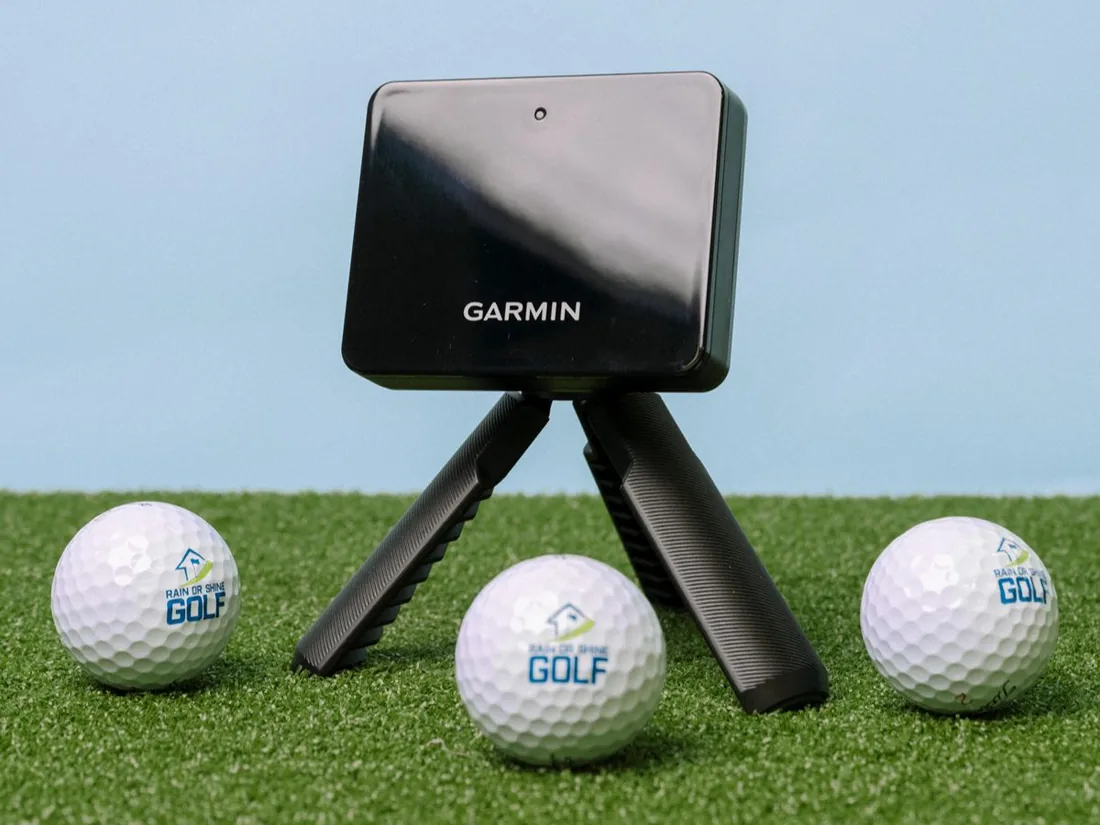
Garmin Approach R10
Radar · Behind the ball · 17–19 ft deep
Questions readers ask
Can I fit a golf simulator in a 12-foot-deep room?
What is the minimum ceiling height for a golf simulator?
How wide should a golf simulator room be?
Figures marked as FOREference calculations show their working; product figures come from the sources on each product page. How we work